
Digital marketing careers have grown at a pace few other fields can match over the last few years, and this growth shows no signs of slowing . This is exactly where a master’s in digital marketing stands apart from a basic short-term certificate — it’s built to take you from foundational knowledge to genuine, job-ready expertise.
Advanced skills only matter if you actually get to practice them. Reading about SEO or watching a tutorial on Google Ads is very different from setting up a real campaign, tracking its performance, and adjusting your strategy based on results. This is why practical, project-based learning has become such a central part of any serious digital marketing program.
In this guide, we’ll walk through exactly what skills a well-structured master’s in digital marketing course should cover — module by module — so you know what to expect and what to look for before enrolling.
Why Choose a Master’s in Digital Marketing?
Before diving into specific skills, it helps to understand why an advanced program is worth considering over a basic course. Here’s what sets it apart:
- Industry demand — Companies increasingly look for marketers who understand the full picture — SEO, paid ads, content, and analytics — rather than just one skill in isolation.
- Career growth — A broader, deeper skill set positions you for senior and specialist roles faster than a single-skill certificate would.
- Advanced learning compared to basic certification courses — Master’s-level programs typically go deeper into strategy, data interpretation, and campaign optimization rather than just tool basics.
- Leadership opportunities — Understanding multiple channels prepares you to eventually lead marketing teams or manage full campaigns end-to-end.
- Freelancing and entrepreneurship — A well-rounded skill set means you can offer complete marketing solutions to clients, rather than a single service.
Core Skills You Will Learn in a Master’s in Digital Marketing
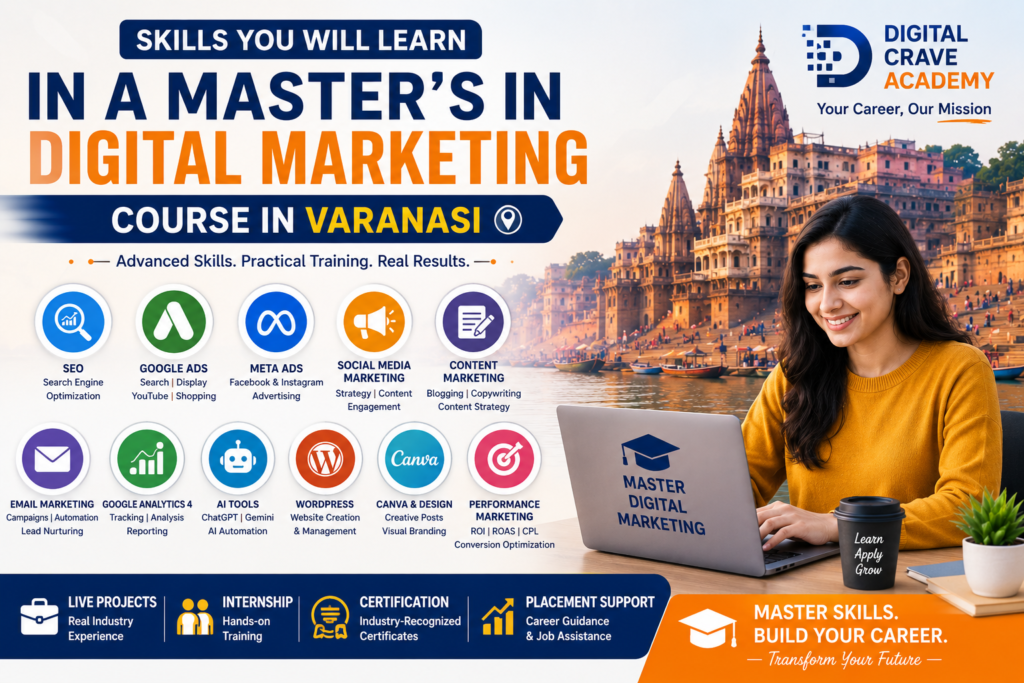
A comprehensive digital marketing course in Varanasi at the master’s digital marketing course level typically spans multiple interconnected modules, each building on the last. Here’s a quick overview of what’s usually covered before we go deeper into each one:
| Skill Area | What It Covers |
| SEO | Keyword research, on-page, technical & off-page SEO |
| Google Ads & PPC | Search, Display, Shopping, Performance Max, YouTube Ads |
| Meta Ads | Facebook & Instagram campaigns, targeting, retargeting |
| Social Media Marketing | Organic growth, content calendars, community management |
| Content Marketing | Blogging, copywriting, storytelling, strategy |
| Email Marketing | Campaigns, segmentation, automation |
| GA4 & Reporting | Traffic analysis, event tracking, data-driven decisions |
| AI Tools | ChatGPT, Gemini, AI-assisted content and research |
| WordPress | Website creation, themes, plugins |
| Canva & Design | Creatives, branding visuals, presentations |
| Performance Marketing | ROAS, CPA, CPL, funnel optimization |
Let’s break each of these down in more detail.
Search Engine Optimization (SEO)
SEO remains one of the foundational pillars of any master’s in digital marketing course , and for good reason — organic traffic tends to be more sustainable and cost-effective than paid traffic in the long run.
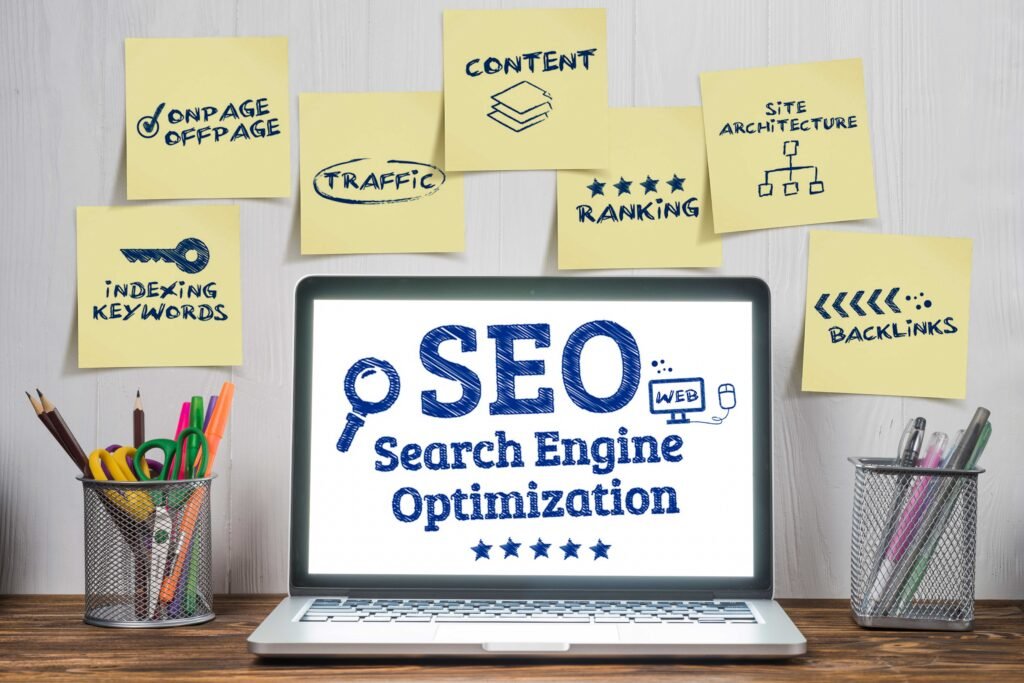
A solid SEO module should cover:
- Keyword research — Identifying what your target audience is actually searching for
- On-page SEO — Optimizing titles, headings, meta descriptions, and content structure
- Technical SEO — Site speed, mobile-friendliness, indexing, and crawlability
- Off-page SEO — Backlink building and building domain authority
- Local SEO — Optimizing for location-based searches, especially relevant for regional businesses
- Content optimization — Structuring content to satisfy both readers and search engines
- SEO tools — Practical use of tools for keyword research, site audits, and rank tracking
Google Ads & Pay-Per-Click Advertising
While SEO builds long-term visibility, Google Ads course modules teach you how to generate immediate, targeted traffic through paid campaigns. This is often one of the most in-demand skills in the industry because it directly ties to measurable business results.
Key areas typically covered include:
- Search Ads — Text ads shown on Google’s search results
- Display Ads — Visual ads across the Google Display Network
- Shopping Ads — Product-based ads for e-commerce businesses
- Performance Max — Google’s AI-driven campaign type across all its platforms
- YouTube Ads — Video advertising for brand and performance goals
- Budget planning — Allocating spend efficiently across campaigns
- Conversion tracking — Measuring what actually drives results, not just clicks
Meta Ads (Facebook & Instagram Marketing)
Meta Ads training focuses on advertising across Facebook and Instagram — platforms that remain hugely relevant for both B2C and increasingly B2B marketing.
This module usually includes:
- Campaign creation — Structuring campaigns around specific business objectives
- Audience targeting — Reaching the right people based on demographics, interests, and behavior
- Retargeting — Re-engaging users who’ve already interacted with your brand
- Lead generation — Running campaigns designed specifically to capture leads
- Ad creatives — Designing visuals and copy that actually stop the scroll
- Campaign optimization — Adjusting bids, budgets, and creatives based on performance data
Social Media Marketing

Beyond paid campaigns, organic social media strategy remains a critical skill, especially for brand building and community engagement.
This typically covers:
- Organic growth strategies without relying purely on ad spend
- Content calendars to plan and maintain consistent posting
- Brand building through consistent voice, visuals, and messaging
- Community management — responding to comments, messages, and engagement
- Influencer collaborations — partnering with creators to expand reach
- Analytics — understanding what content actually resonates with your audience
Content Marketing & Copywriting
Good content is what ties every other channel together — your ads, your website, your emails, all depend on clear, persuasive writing.
A strong content marketing module includes:
- Blogging for organic traffic and thought leadership
- SEO content writing that balances readability with search optimization
- Landing pages designed specifically for conversions
- Email copy that drives opens and clicks
- Website copy that clearly communicates value
- Storytelling techniques that make brands memorable
- Content strategy — planning content around business goals and audience needs
Email Marketing & Marketing Automation
Email remains one of the highest ROI channels in digital marketing, particularly for nurturing leads over time.
This module typically covers:
- Email campaigns — Designing and sending targeted email sequences
- Lead nurturing — Moving prospects through the sales funnel via email
- Segmentation — Grouping audiences for more relevant messaging
- Automation workflows — Setting up triggered emails based on user behavior
- Newsletter strategy — Building consistent, engaging newsletter.
Google Analytics (GA4) & Reporting
Data interpretation is what separates guesswork from strategy. A digital marketing certification program worth its salt will include hands-on GA4 training.
Key areas include:
- User behavior — Understanding how visitors interact with a website
- Traffic analysis — Identifying where visitors are coming from
- Goal tracking — Measuring specific actions like form submissions or purchases
- Event tracking — Monitoring specific interactions like button clicks or video views
- Performance reports — Compiling data into actionable summaries
- Data-driven decision-making — Using analytics insights to refine campaigns
Google’s official Analytics documentation is a valuable ongoing reference even after course completion, since reporting features are updated periodically.
AI Tools for Digital Marketing
AI in digital marketing has moved from being a novelty to a genuine part of daily workflows. A modern program should teach the practical, hands-on use of these tools rather than treating them as an afterthought.
This includes:
- ChatGPT — For content ideation, drafting, and research
- Google Gemini — For research and content assistance within Google’s ecosystem
- AI-powered content tools — For faster content creation and editing
- AI for keyword research — Speeding up research with AI-assisted insights
- AI for campaign optimization — Using AI suggestions to refine targeting and bidding
- Prompt writing — Crafting effective prompts to get useful outputs from AI tools
- Workflow automation — Using AI to handle repetitive tasks, freeing up time for strategy
Website Development Using WordPress
Since so much of digital marketing eventually funnels traffic to a website, having working knowledge of WordPress is a genuinely practical skill.
This module usually covers:
- Website creation — Setting up a functional site from scratch
- Themes — Choosing and customizing designs
- Plugins — Adding functionality like SEO tools, forms, and analytics
- Landing pages — Building pages specifically designed for conversions
- SEO-friendly structure — Ensuring the site is built in a way search engines can crawl and index easily
- Basic website maintenance — Updates, backups, and troubleshooting common issues
Canva & Creative Design
Visual content plays a huge role in how campaigns perform, and you don’t need to be a professional designer to create effective marketing visuals.
This typically includes:
- Social media creatives — Designing posts and stories that fit each platform
- Display ads — Creating visuals for Google Display campaigns
- Presentations — Building client-ready decks
- Branding materials — Logos, color palettes, and brand guidelines
- Marketing visuals — Infographics, banners, and promotional graphics
Performance Marketing
Performance marketing ties everything together by focusing on measurable outcomes rather than vanity metrics.
Key concepts include:
- ROAS (Return on Ad Spend) — Measuring revenue generated per rupee spent
- CPA (Cost Per Acquisition) — Understanding how much it costs to acquire a customer
- CPL (Cost Per Lead) — Tracking the cost efficiency of lead generation campaigns
- Conversion optimization — Improving the percentage of visitors who take a desired action
- Funnel optimization — Identifying and fixing drop-off points in the customer journey
- Campaign scaling — Growing successful campaigns without proportionally increasing costs
Why Digital Crave Academy Helps You Build Industry-Ready Skills
If you’re researching a best digital marketing institute in Varanasi for a master’s-level program, Digital Crave Academy structures its training around the practical skills covered throughout this guide. Specifically, the program focuses on:
- Practical classroom learning rather than purely theoretical lectures
- Live projects that mirror real business scenarios
- AI-integrated curriculum reflecting how modern marketing teams actually operate
- Google Ads & Meta Ads training covering both search and social advertising
- SEO implementation through hands-on exercises
- Portfolio development so you graduate with demonstrable work
- Internship opportunities for real-world exposure
- Placement assistance to support your job search
- Experienced mentors who bring practical industry context to the classroom
- Personalized guidance based on your specific career goals
- Industry-focused assignments designed around real business needs
Soft Skills Every Digital Marketer Should Develop In Master’s In Digital Marketing Course
Technical skills matter, but soft skills often determine how far you go in your career, especially in client-facing or leadership roles.
- Communication — Explaining strategies and results clearly to clients or teams
- Client handling — Managing expectations and building trust
- Presentation skills — Presenting campaign performance and strategy convincingly
- Teamwork — Collaborating effectively with designers, writers, and other marketers
- Time management — Juggling multiple campaigns and deadlines
- Problem-solving — Adjusting strategies when campaigns underperform
- Analytical thinking — Interpreting data to make informed decisions rather than guesses
Practical Skills You’ll Gain Through Live Projects
Reading about strategy is one thing — actually executing it is what builds real confidence and capability.
- Real campaigns — Working on live or simulated marketing campaigns
- Case studies — Analyzing what worked and what didn’t in past campaigns
- Portfolio development — Building a body of work to show potential employers or clients
- Internship — Gaining structured, real-world work experience
- Industry assignments — Practicing with scenarios modeled on actual business needs
- Client projects — Handling real client requirements and feedback
Career Opportunities After Learning Master’s In Digital Marketing
Once you’ve built this well-rounded skill set, a range of career paths open up, including:
- SEO Executive
- PPC Executive
- Digital Marketing Executive
- Social Media Manager
- Performance Marketer
- Content Strategist
- Freelancer
- Agency Owner
- Entrepreneur
Whether you prefer working within a company structure or building your own client base, this skill combination gives you the flexibility to choose the path that fits your goals.
Frequently Asked Questions
1. What skills are taught in a master’s in digital marketing? A comprehensive program typically covers SEO, Google Ads, Meta Ads, social media marketing, content marketing, email automation, GA4 analytics, AI tools, WordPress, design basics, and performance marketing.
2. Is practical training included in the master’s digital marketing course? Yes, a well-structured program should include hands-on projects, live campaigns, and real or simulated client work alongside theoretical learning.
3. Will I learn AI tools as part of the master’s in digital marketing course? Most updated programs now include practical training on AI tools like ChatGPT and Google Gemini for content creation, research, and campaign optimization.
4. Do I need coding knowledge for master’s in digital marketing? No, coding isn’t a requirement. Basic familiarity with platforms like WordPress is helpful, but the core skills don’t involve programming.
5. What career opportunities are available after this master’s in digital marketing course? Graduates can pursue roles like SEO Executive, PPC Executive, Social Media Manager, Performance Marketer, or choose to freelance or start their own agency.
6. Is SEO included in a master’s in digital marketing course? Yes, SEO is typically one of the core modules, covering keyword research, on-page, technical, and off-page optimization.
7. Will I receive a certification after completing the master’s in digital marketing course? Most institutes provide a completion certificate, and some also include guidance toward industry-recognized certifications. It’s best to confirm specifics with your chosen institute.
8. How long does a master’s in digital marketing course typically take? Duration varies by institute and program depth, ranging from a few months to a year for comprehensive master’s-level programs. Check exact timelines with the institute directly.
9. Can beginners join a master’s in digital marketing program? Yes, most programs are designed to take learners from foundational concepts to advanced skills, making them accessible even without prior marketing experience.
10. Is digital marketing a good career choice? Yes, given the continued shift of businesses toward online platforms, master’s in digital marketing offers strong demand, multiple specializations, and flexibility, including remote work and freelancing options.
Conclusion
Mastering practical digital marketing skills isn’t just about collecting certificates — it’s about building the kind of hands-on expertise that actually translates into career readiness. A structured master’s digital marketing course when it includes live projects, AI tools, and real client exposure, gives you a genuine edge over surface-level, single-skill courses.
Whether your goal is a corporate role, freelancing, or eventually building your own agency, the skills covered in this guide — from SEO and paid ads to analytics and AI — form the foundation you’ll rely on throughout your career.
If you’d like to understand the detailed curriculum, batch schedules, or career guidance in more depth, feel free to reach out to Digital Crave Academy for a counseling session or a demo class for master’s in digital marketing.